From the very beginning, I was interested in cooking. My favorite playtime was with leftover small pots and unused utensils, creating a corner at home to imitate what I saw, feeling it was the identity of the lady of the house. I grew up in a home that loved and valued food. My grandmother was known for her Kuwaiti Jareesh, and she passed this down to my mother. Even among many dishes, you could always recognize my mother’s Jareesh. At that time, I felt dishes were like honorary medals awarded to women. My mother excelled not only in that dish but in all recipes. As the saying goes, “she herself is sweet in cooking,” and thankfully I inherited a share of that. We also grew up listening to Professor Fatima Hussein and her programs; she was the first to document Kuwaiti cuisine in a book, which became an essential item for students abroad.
My interest in food continued into my Master’s studies, where my thesis was titled: "When Food Becomes Identity: Cultural Dimensions in Anime Films – Hayao Miyazaki"...
From this perspective, Kuwaiti cuisine held great importance for me, touching my emotions and reflecting my cultural identity. I wanted it to remain authentic and reliable in every way, to convey to the world those simple corners of old Kuwaiti homes that fed many families and guests. These corners were created by women who carried medals of love and appreciation on their chests. That is why I speak about Kuwaiti cuisine from my heart before my mind, showing it through a completely different lens than we are used to.
A major reference was "The Old Kuwaiti House" compiled by Mohammed Al-Khurs and Maryam Rashid Al-Aqrouqah – 1999, which greatly helped form a clear picture of the old Kuwaiti home, especially the details of the kitchen, allowing me to reimagine those memory-filled spaces.
The Kuwaiti kitchen went through many stages until it reached what we know today, closely linked to the design of the space, the tools used, and the availability of food ingredients and seasonings.
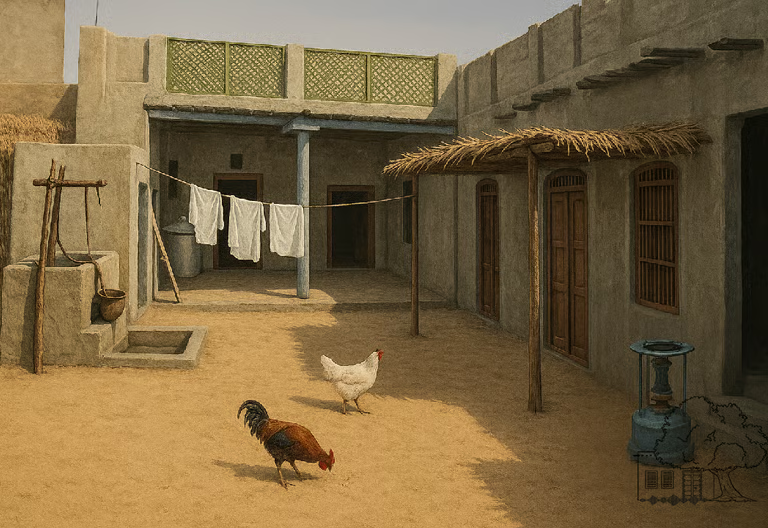
The Kuwaiti house consisted of several courtyards (open spaces with built structures), including: the Diwaniya courtyard, reserved for men only; the Haram courtyard, for the family; and “that courtyard,” dedicated to the kitchen and its facilities such as animal shelters, a room for them in winter, the Dar Al-Keil (food storage room), the fuel room, and a sandy yard with a well (Jleeb) and a food drain. I will discuss these facilities in detail later, but first, let’s talk about the kitchen room.
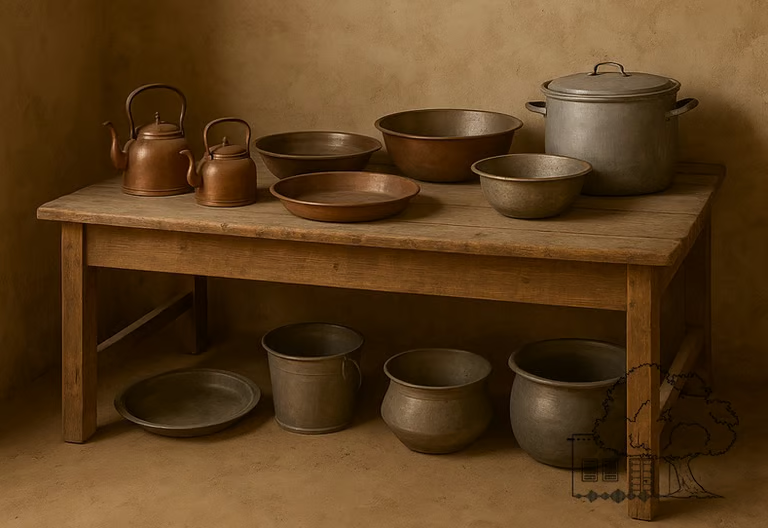
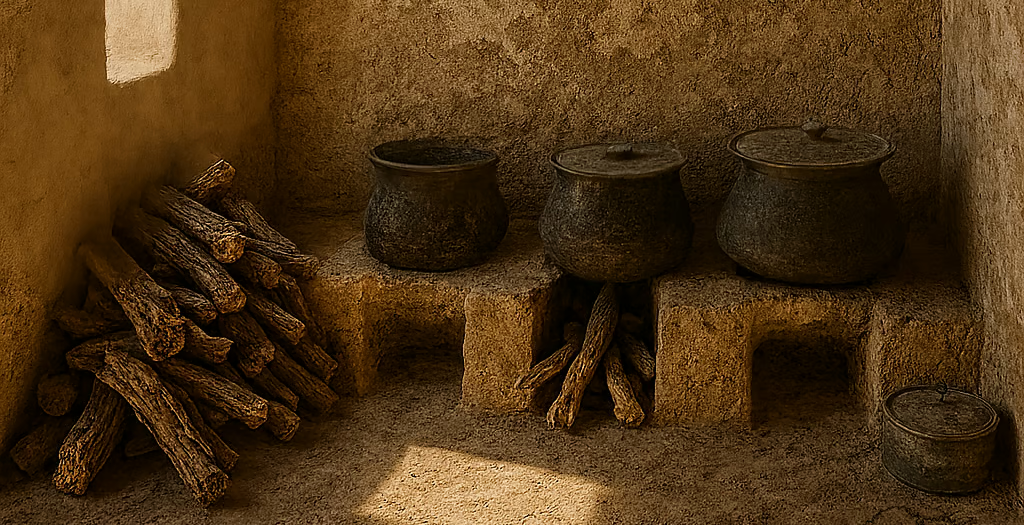
It consisted of a room 3 meters long and 3 meters wide, with a square opening for ventilation and morning light. It contained one or more (Marka), a base of three stones or clay raised from the ground to place pots and light fires. On the side was a wooden shelf 2 to 2.5 meters long, 50 cm high, and 90 cm wide, placed inside or outside the kitchen to arrange cooking utensils after washing.
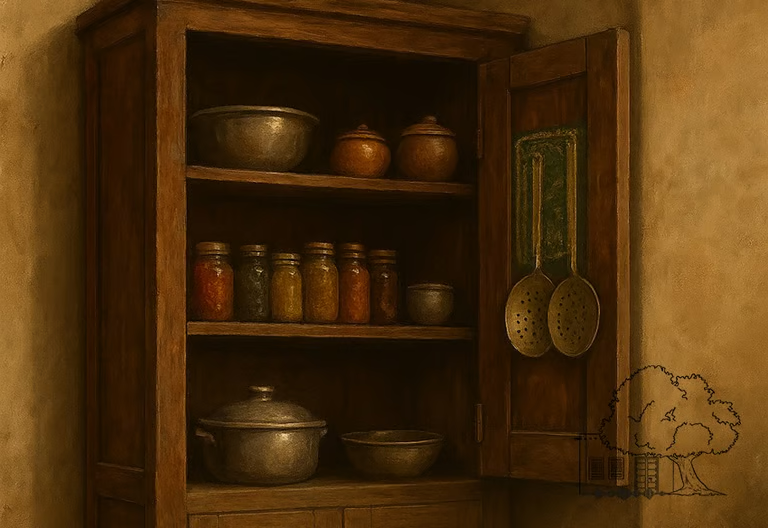
There was also a small cupboard with two doors for storing spices, pots, and large perforated spoons (Malalis).
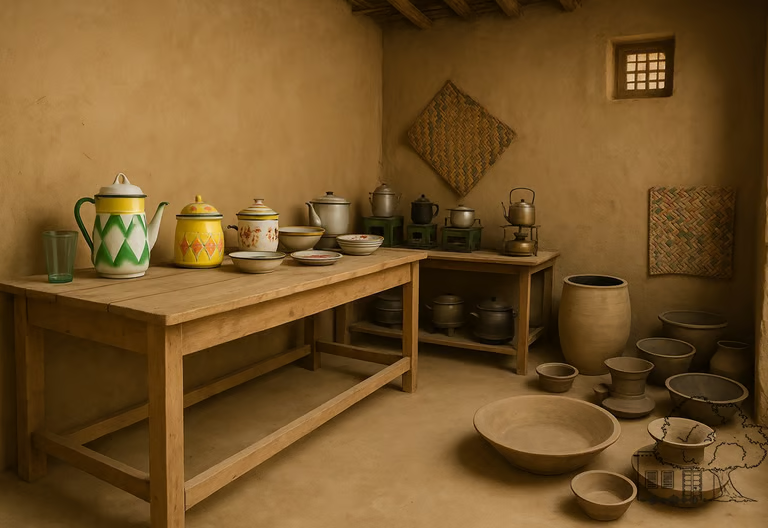
It is like a small wooden table, with dimensions ranging between 2 to 2.5 meters in length, 80–90 cm in width, and 50 cm in height. It was placed inside or outside the kitchen to arrange cooking utensils after washing so they could dry.
A simple wooden cupboard with two doors. The upper section was covered with a metal mesh that allowed ventilation while preventing insects from entering. Its height was about 2 meters, width about 1 meter, and depth 50 cm. It was used to store some food that needed preservation, as well as spices and various household and kitchen tools.
The stove was a pit surrounded by three stones covered with clay. In Arabic, "Mawqid" or "Mustawqid" means the place of fire, while "Mawqidah" refers to a clay-and-stone structure where fire was lit for cooking and other purposes. Firewood, shrubs, and other fuel materials were placed between the stones, and the fire was lit after placing the cooking pot on top.
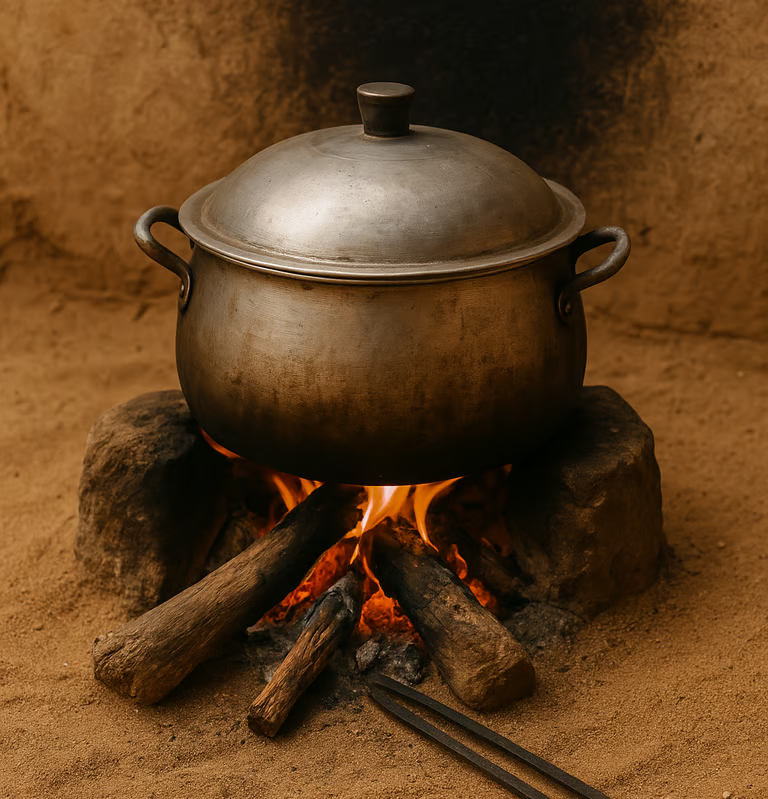
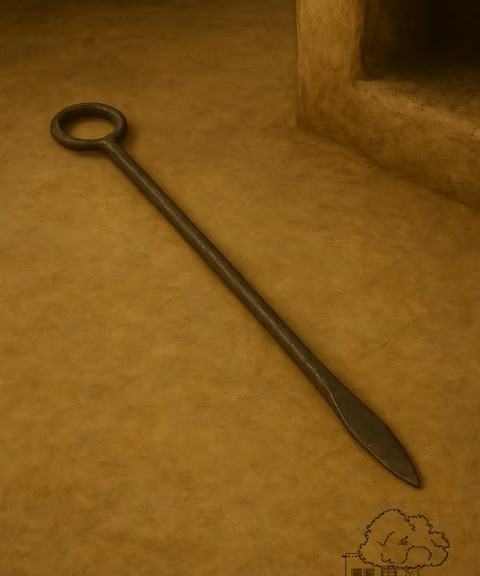
A rod of iron usually placed beside the stove or brazier, used to stir the fire under the pot. In Arabic, “Al-Mihraath” refers to the tool used to move the fire in the oven.
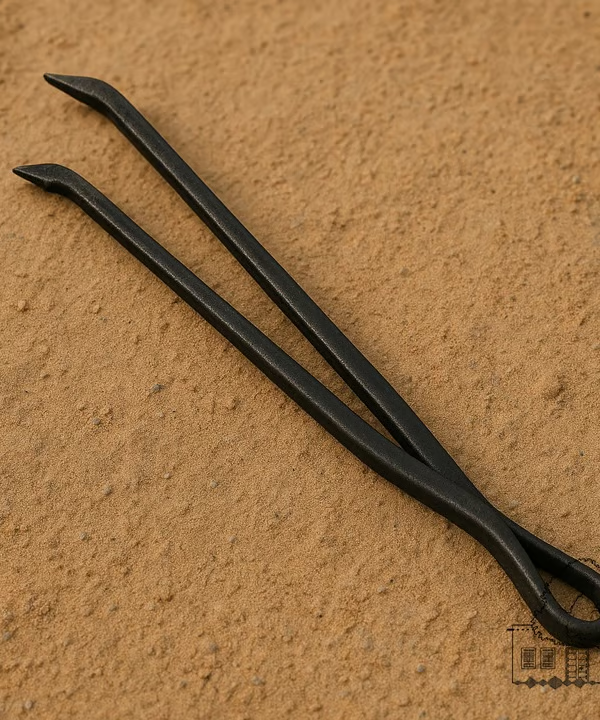
Iron tongs used to pick up embers or bread from the oven. They were considered essential kitchen tools and were crafted by blacksmiths in various shapes and lengths.
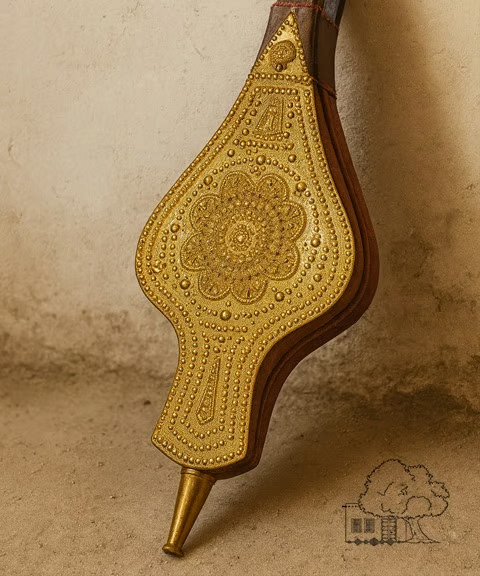
A hand tool used to blow air onto the fire to help ignite it. It had an oval shape ending with a tube from which air was pushed out. It consisted of two identical parts connected by leather that expanded and contracted to draw in and release air. It was often decorated with golden or silver pins in shapes such as stars and flowers.
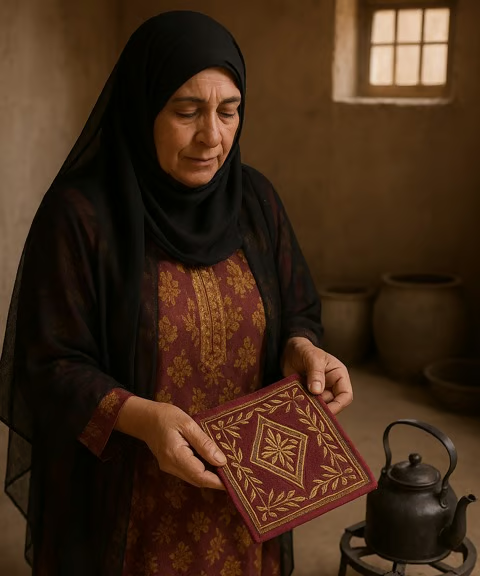
A small square piece of cloth, thick or padded with cotton, sewn by hand or machine. It was used to hold hot pots, and coffee servers used it to hold the dallah (coffee pot). People enjoyed making them in different colors and patterns.
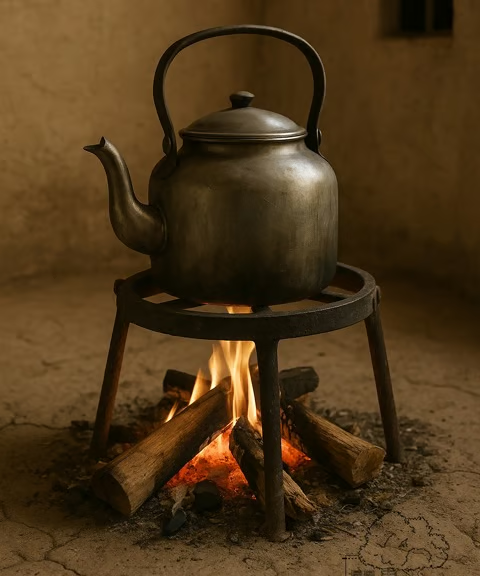
A round iron ring set on three or four legs, used to hold pots and kettles with fire lit underneath. It was made in different sizes depending on the size of the pots.
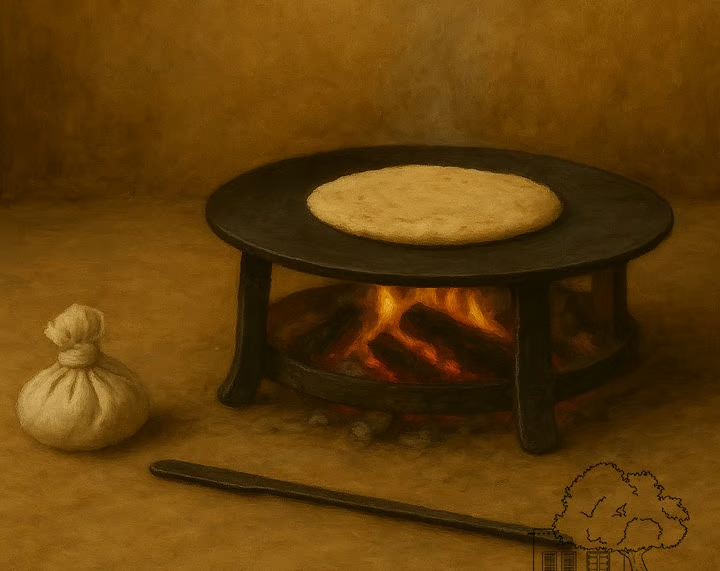
A thick iron sheet, round and convex in shape, with a handle to hang it on the wall after use. It was placed on stands above the ground with fire lit underneath to heat it, ready for spreading dough to make Ragaq bread or Bulbul bread. Other types of Taweh were used to prepare “Sabeeb” bread, small discs similar to modern pancakes, served with date syrup or sugar syrup.
A piece of cloth stuffed with pieces of fat, used to wipe the Taweh after heating and before spreading dough, to prevent sticking.
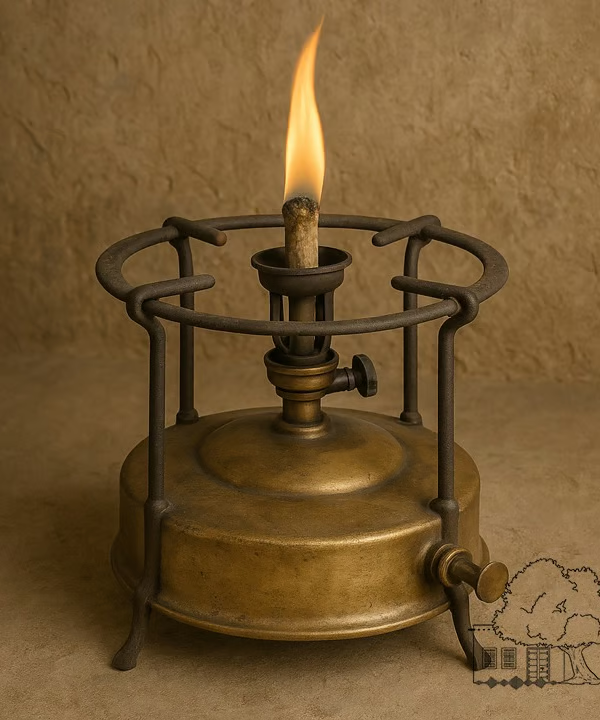
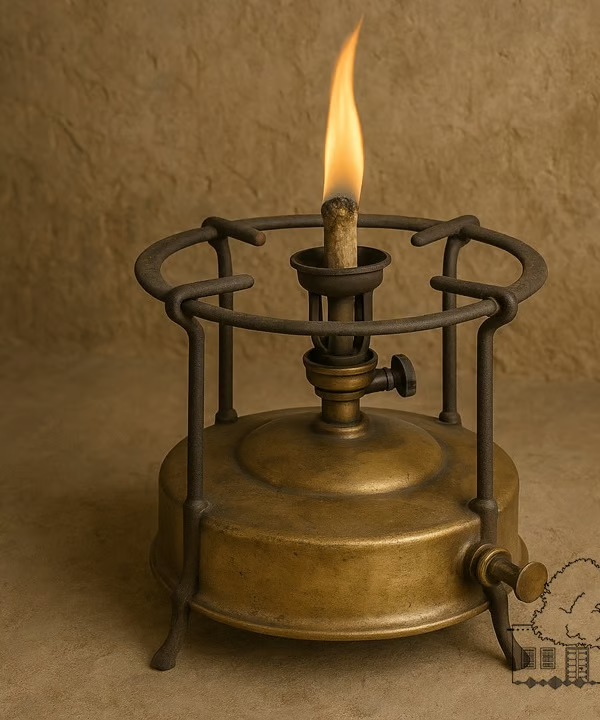
A manufactured stove of various types and sizes that burned kerosene (kāz). The ignition tool was a thick cotton wick connected to the fuel tank. When lit, it produced a high-heat flame and was used for cooking food before the advent of gas and electric stoves.
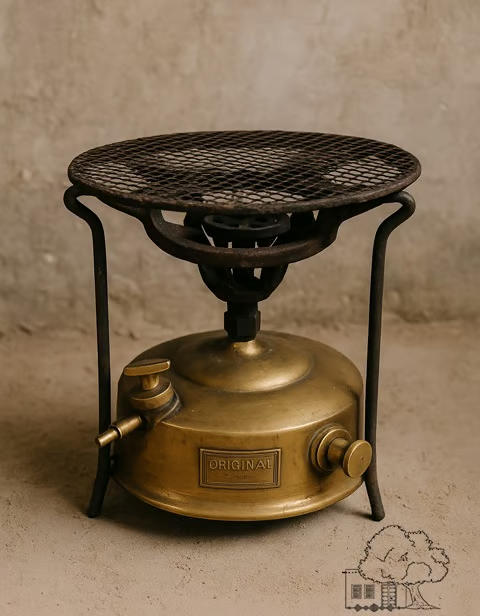
A copper stove of varying sizes, consisting of a kerosene tank with three stands attached to its sides, topped by a metal grid on which the cooking pot was placed. It contained an air pump that pushed kerosene through a tube to the burner head. When the flame weakened, a special needle called the "Primus needle" was used to restore its strength. It was most often used for heating water.
The room was named after the "Keila," a container used to measure grains. Women used it to determine the number of measures of rice for a meal. It was made of copper, aluminum, or even reused cans such as pineapple tins. The room was locked, and the key was hung around the neck of the lady of the house to safeguard provisions. In some homes, there was a large wooden chest called "Saharat Al-Keil," used to store dates, flour, salt, sugar, fat, and spices.
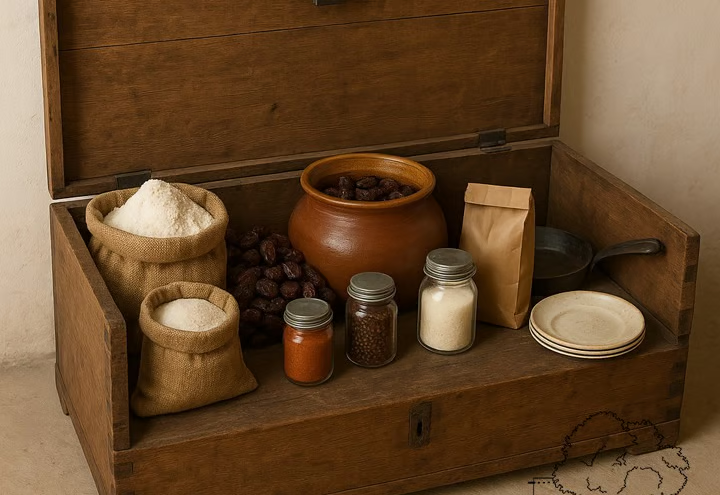
The room also stored animal feed and dates packed in "Qullah" baskets made from palm fronds. Sometimes date syrup would drip onto the floor, attracting rodents, which made some people wary of it. It also contained sacks of rice and legumes.
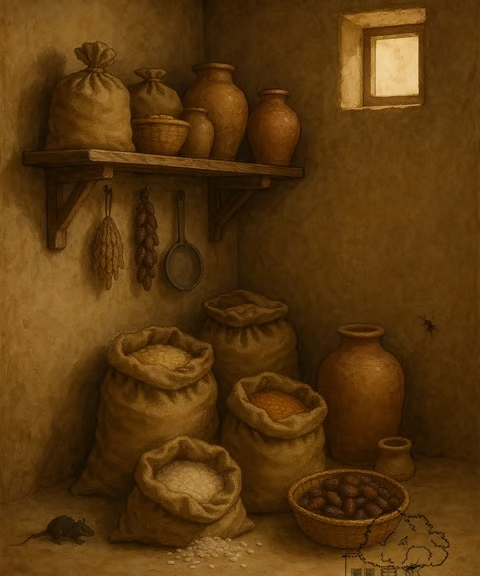
It was used to store animal feed, dates packed in "Qullah," as well as sacks of rice and legumes. Sometimes the place attracted rodents due to dripping date syrup.
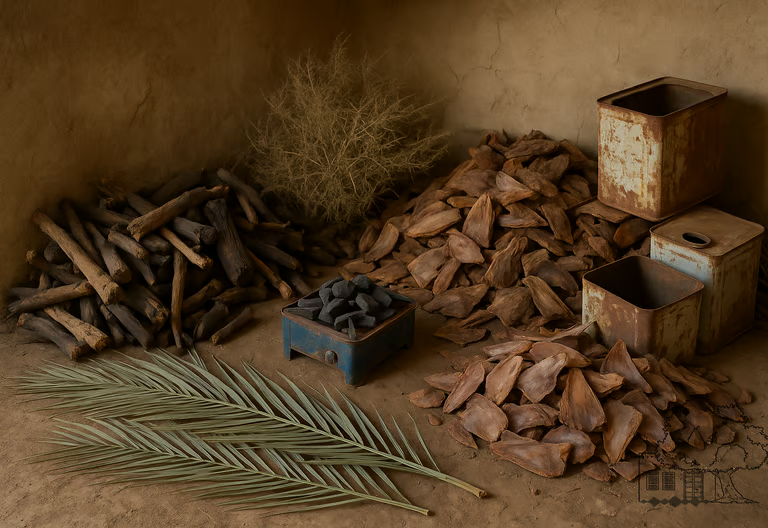
Karab refers to the thick bases of palm fronds. In Arabic, it means the broad, sturdy roots of the fronds. A single piece is called "Karbah."
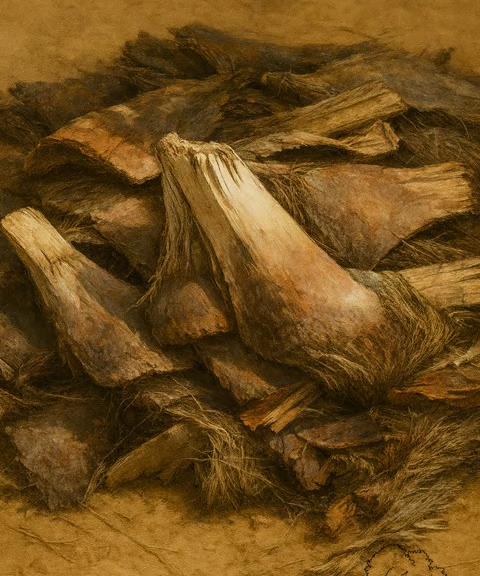
Leef refers to the coarse brown fibers that grow around the fronds at the top of the palm tree. They were used for many purposes, including making ropes.
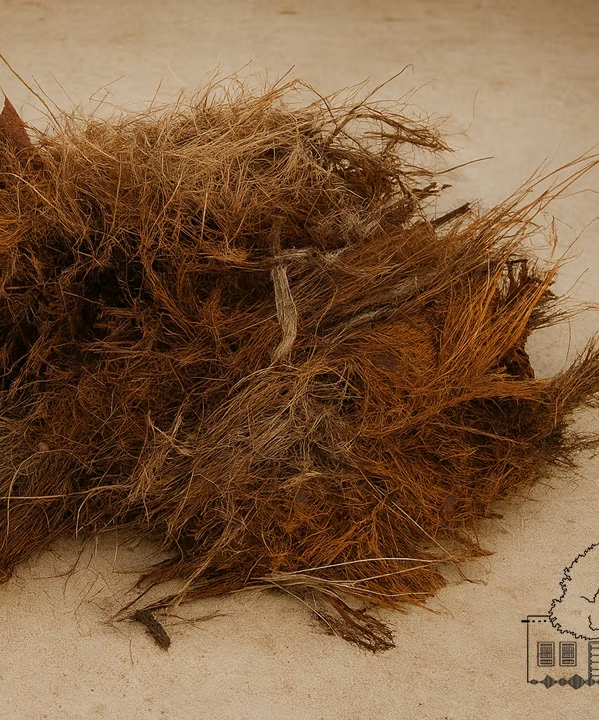
Palm fronds with leaves, “Sa‘f” is the plural of “Sa‘fa.” Before drying, they are divided into several parts: the stalk (Jareed or Kafoud), leaves (Khos), Karab, thorns, and fibers (Leef). Bedouins called it “A‘seeb,” with the plural “Usub” or “Usuban,” which is classical Arabic. Palm fronds were imported by ships from neighboring countries and used as fuel.
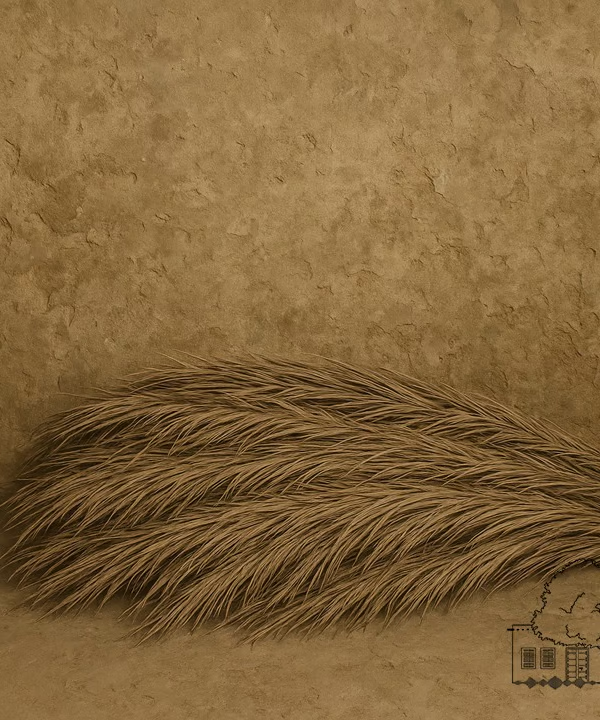
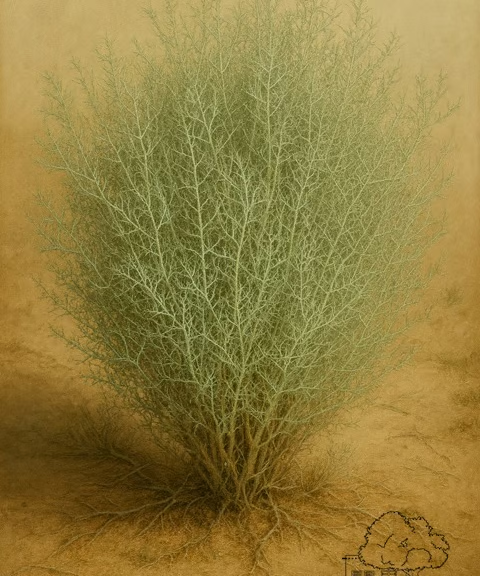
A plant that grows in the hot season with a salty taste. Types include: Ramth, Qullam, Athl, Arad, Shinan, and Arfaj. They were collected and brought to the city for sale, known for long burning and high heat.
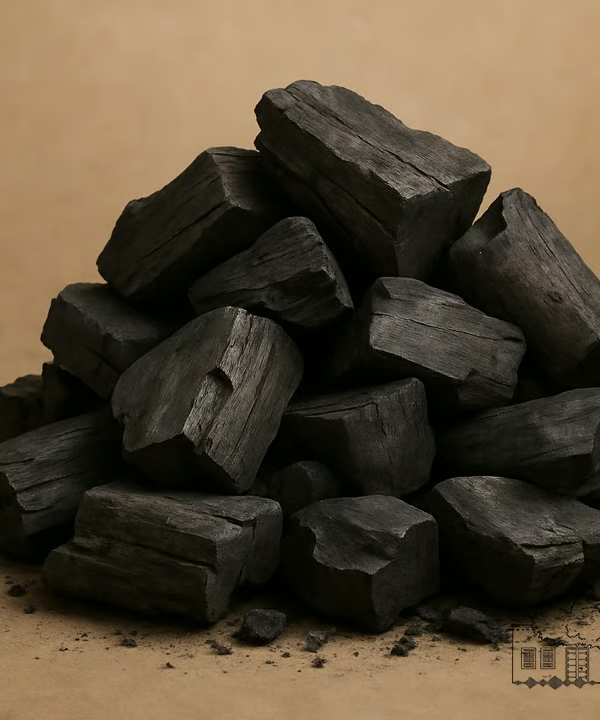
Partially burned wood imported into Kuwait, used for heating. When burned, it turned into embers. Charcoal trade was popular, with a special market called “Souq Al-Fahm” behind Souq Waqif, where it was sold in sacks.
Wood cut from trees and imported, used as fuel after being chopped into smaller pieces.
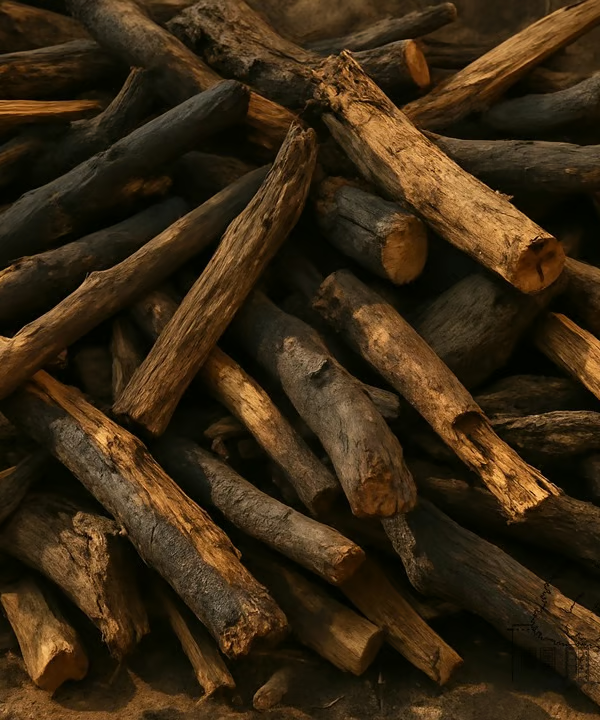
Kerosene before the discovery of oil was imported in tins from India and later from Abadan. It was sold from warehouses called “Kazkhana” (House of Kerosene). Initially used for lighting and igniting wood, later for heaters and industrial stoves. It had multiple types that burned kerosene.
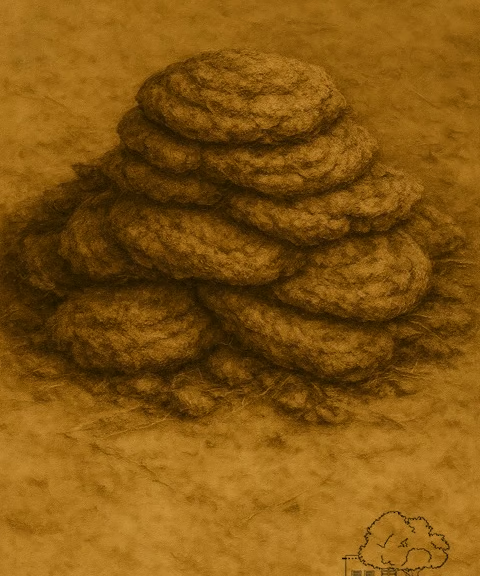
Camel dung was collected and sold in Safat Square, used by people and bakers as fuel for ovens due to its intense heat. There was also “Khatha,” cow dung, which was collected, dried in the sun, and used as fuel or fertilizer.
A cement basin in the corner of the courtyard for washing hands and utensils. Food residues mixed with wash water drained into a covered pit nearby, designated for this purpose so as not to mix with other waste water. In Arabic, “Balou‘a” means a water drain, and “Zad” in Kuwaiti dialect means food.